
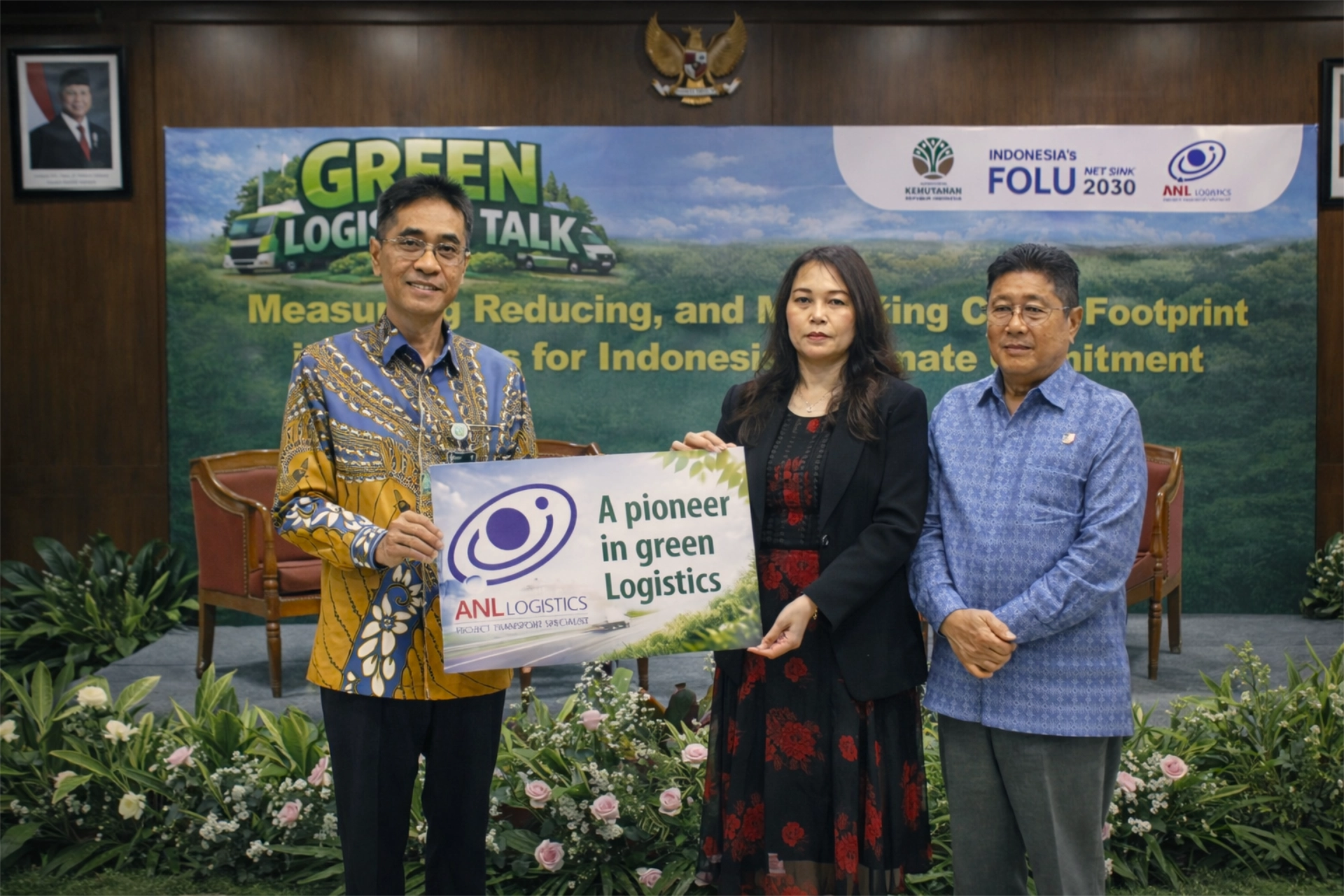
The Green Logistics Talk 2026 was convened on 19 February 2026 at the Sonokeling Room, Manggala Wanabhakti, Jakarta, in a hybrid format, bringing together key stakeholders to discuss the future of sustainable logistics in Indonesia. The forum served as a strategic platform to encourage the transformation of Indonesia’s logistics sector toward a low-carbon, measurable, and sustainable system that supports the country’s climate and development commitments.
Initiated by Netty Sri Rejeki, Founder of ANL Logistics, the event responded to the growing urgency of addressing greenhouse gas (GHG) emissions generated by logistics and transportation activities. As Indonesia’s economic and trade activities continue to expand, emissions from fuel consumption in freight transportation, warehousing, distribution, and supply chain operations have also increased significantly. Participants emphasized that the logistics sector must play a more active role in supporting Indonesia’s FOLU Net Sink 2030 target and Nationally Determined Contribution (NDC) commitments through stronger emissions management and transparent carbon accounting practices.
The forum gathered representatives from ministries and government agencies, state-owned enterprises, logistics providers, manufacturing and distribution companies, academics, carbon auditors, industry associations, and national media. Through a series of panel discussions and interactive dialogue sessions, participants explored practical pathways for accelerating green logistics implementation in Indonesia, including the adoption of internationally certified emission measurement technologies, investment in cleaner operational systems, and stronger policy integration across sectors.
The first panel session, titled “From Commitment to Action: Driving Low-Carbon Logistics through Technology and Investment,” highlighted the importance of innovation, infrastructure readiness, and strategic financing in accelerating the transition toward low-carbon logistics systems. Speakers discussed how technology adoption, operational efficiency, and emissions reduction strategies can strengthen both environmental performance and business competitiveness.
The second panel session, “Measuring What Matters: Carbon Accounting and Policy Integration in Green Logistics,” focused on the growing importance of robust carbon accounting systems and harmonized policy frameworks. Discussions underscored the need for transparent, credible, and measurable emissions reporting to ensure accountability and support long-term sustainability targets.
UN Global Compact Network Indonesia (IGCN) participated in the forum and was represented by its President, Y.W. Junardy. In his remarks, he emphasized the strategic importance of logistics in Indonesia as an archipelagic nation, highlighting how logistics systems connect islands, businesses, economic activities, and communities across the country. He also noted that the logistics sector has become increasingly relevant within the global climate transition agenda due to its carbon-intensive nature.
Referring to IGCN’s member survey conducted in December 2025, Y.W. Junardy shared that environmental and energy issues have emerged as top priorities among businesses, reflecting a broader shift in corporate awareness and strategy. He stressed that sustainability and climate considerations are no longer viewed as separate from business growth, but rather as essential components of long-term resilience and competitiveness.
In addition, he highlighted the importance of education, capacity building, and stakeholder empowerment in driving meaningful transformation across sectors, including logistics. According to him, strengthening awareness and technical capability among businesses and industry actors will be critical to accelerating Indonesia’s sustainable transition.
IGCN also extends its sincere appreciation to ANL Logistics and Netty Sri Rejeki for organizing the Green Logistics Talk 2026 and for inviting IGCN to contribute to this important discussion. The forum reflects the growing importance of cross-sector collaboration in advancing sustainable logistics practices, strengthening carbon accountability, and accelerating Indonesia’s transition toward a low-carbon and resilient economy.
The Green Logistics Talk 2026 reaffirmed that transforming the logistics sector is not solely about meeting regulatory requirements, but about building a transparent, accountable, and globally competitive ecosystem that supports sustainable economic growth. Through stronger cross-sector collaboration and the adoption of credible emissions measurement systems, the forum aimed to catalyze tangible progress toward a greener and more resilient logistics sector in Indonesia.